
Artefacts and finds
Physical evidence from the ancient world that bears on the biblical record: kings, peoples and places the Bible names, the oldest copies of its text, and the sites where the creation record is read. Each find shows what it supports, where it is held, and any limit worth knowing.
Kings and empires of the Old Testament
Inscriptions from Israel’s neighbours and enemies name the kings, peoples and events the Bible records.
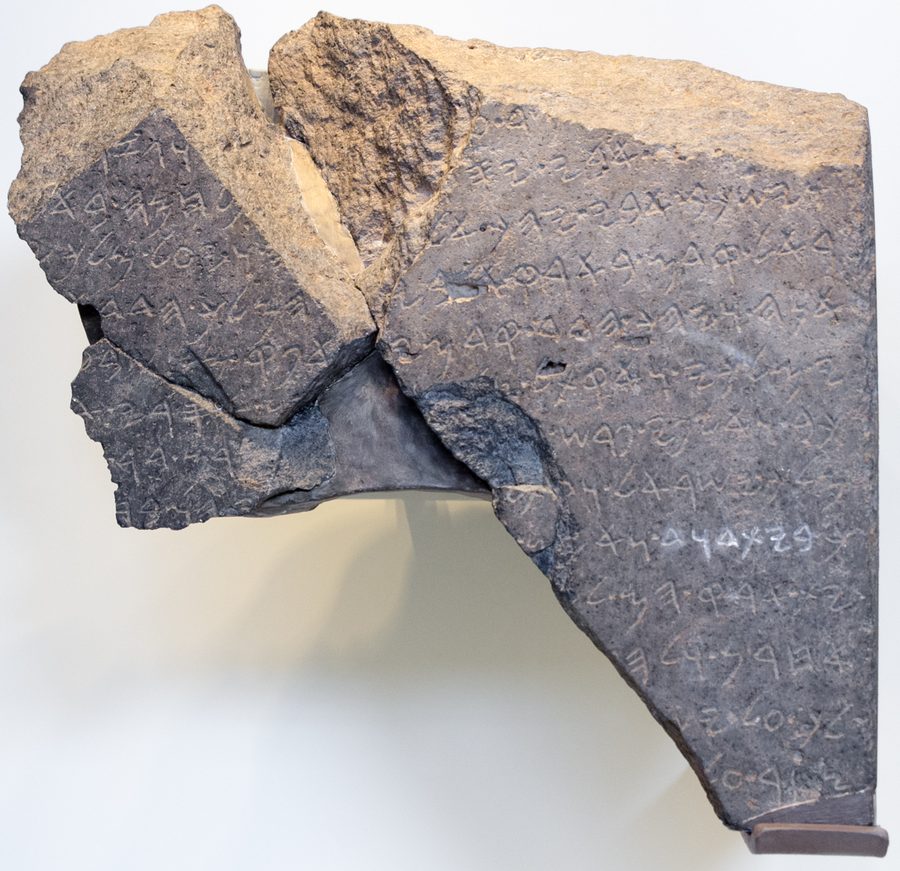
Photo: Oren Rozen, CC BY-SA 4.0, via Wikimedia Commons (resized). Tel Dan stele
9th century BC · basalt · Aramaic
- What it supports
- An inscription naming the “House of David”, the dynasty of Judah’s kings: the first such reference found outside the Bible. Written by an enemy of Israel about a century and a half after David, it shows his royal line was known to Israel’s neighbours. Most scholars accept the reading. It bears on 1–2 Kings and the account of David’s dynasty (2 Samuel 7). Israel Museum
- What it is
- A fragment of a victory inscription found at Tel Dan in northern Israel, in 1993–94.
- Where it is
- Israel Museum, Jerusalem (IAA 1996-125; 1993-3162). Record
- Limits
- The text is fragmentary, and the reading and reconstruction of some lines are still discussed.
- Related question
- HQ17: Wasn't the Bible changed? Copied from pagan myths?
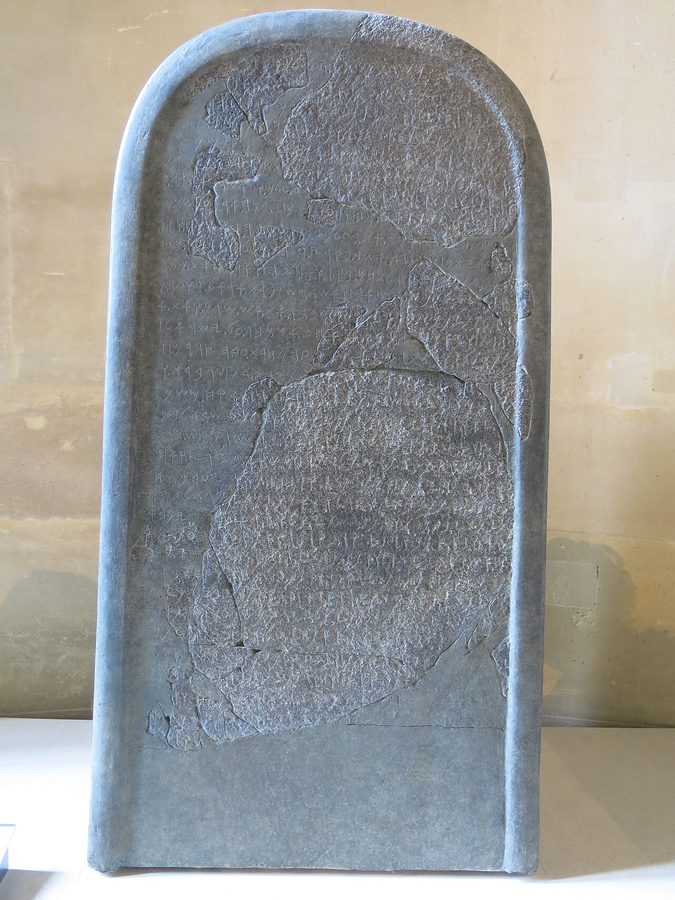
Photo: Tangopaso, public domain, via Wikimedia Commons. Mesha Stele (Moabite Stone)
About 840 BC · basalt
- What it supports
- King Mesha of Moab tells how he threw off Israel’s rule, the same revolt recorded in 2 Kings 3:4–5. It names Omri, king of Israel (1 Kings 16), and is one of the earliest inscriptions outside the Bible to name YHWH, the God of Israel. Its 34 lines are in a language very close to Hebrew. Louvre · Britannica
- What it is
- A black basalt victory monument found at Dhiban, Jordan, in 1868.
- Where it is
- Louvre, Paris (AO 5066). Record
- Limits
- A further proposed reading of “House of David” in line 31 is disputed; the references to Omri and YHWH are not.
- Related question
- HQ17: Wasn't the Bible changed? Copied from pagan myths?
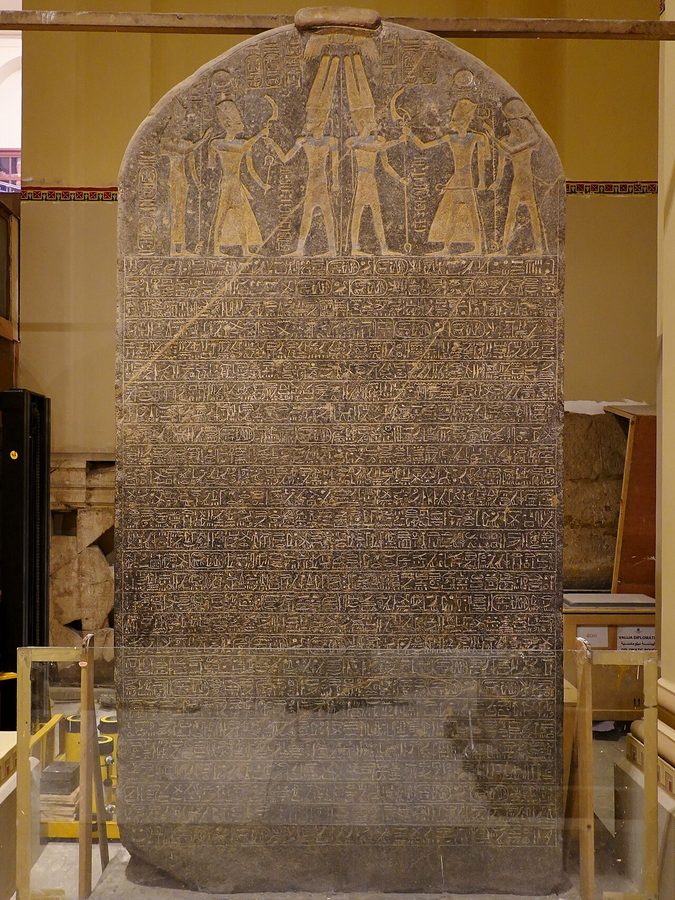
Photo: Olaf Tausch, CC BY 3.0, via Wikimedia Commons (resized). Merneptah Stele (Israel Stele)
About 1208 BC · granite
- What it supports
- The earliest known mention of Israel outside the Bible. Pharaoh Merneptah lists Israel among the peoples he defeated in Canaan, and marks it with the sign for a people rather than a city. It shows that Israel existed as a people in the land by about 1208 BC, as the books of Joshua and Judges describe. Britannica · museum record
- What it is
- A granite victory hymn found by Flinders Petrie at Thebes, Egypt, in 1896.
- Where it is
- Egyptian Museum, Cairo (JE 31408). Record
- Limits
- It does not name Moses or describe the Exodus, and it does not say which pharaoh the Exodus came under.
- Related question
- HQ30: Did the Exodus happen?
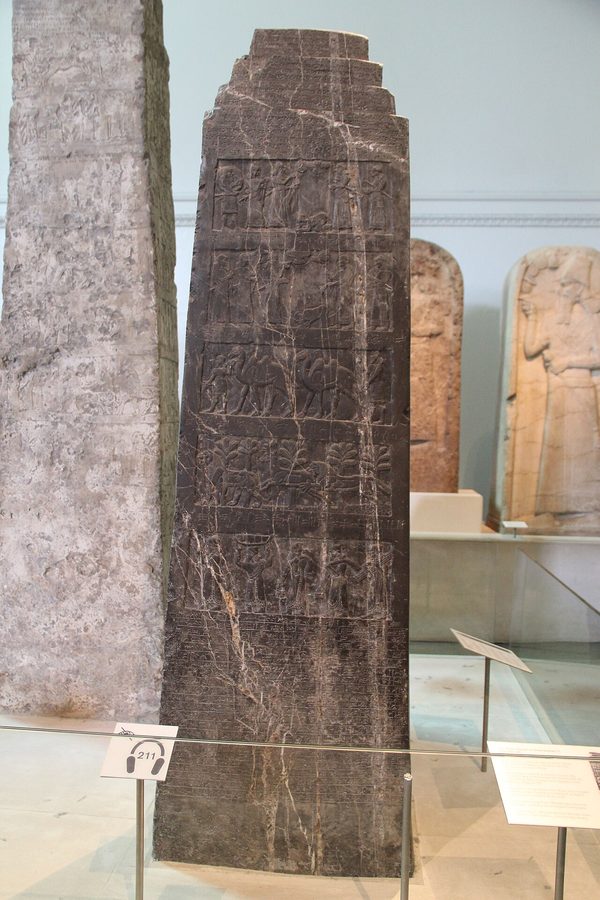
Photo: Gary Lee Todd, CC0, via Wikimedia Commons. Black Obelisk of Shalmaneser III
825 BC · black limestone
- What it supports
- The Assyrian king records tribute from “Jehu, son of Omri”, the king of Israel whose reign is told in 2 Kings 9–10. One panel shows an Israelite bowing before Shalmaneser: if it is Jehu himself, it is the only known image of an Israelite king made in his lifetime. British Museum · Britannica
- What it is
- A four-sided monument from Nimrud (ancient Kalhu), Iraq, carved with the king’s campaigns.
- Where it is
- British Museum, London (1848,1104.1). Record
- Limits
- Whether the bowing figure is Jehu or his envoy is debated.
- Related question
- HQ17: Wasn't the Bible changed? Copied from pagan myths?
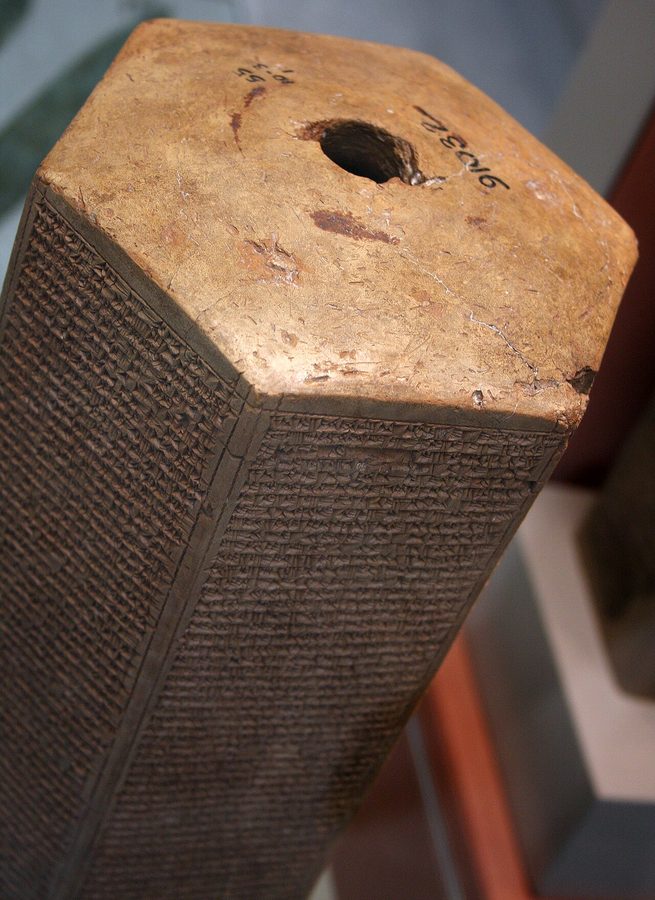
Photo: David Castor, public domain, via Wikimedia Commons. Sennacherib Prism (Taylor Prism)
691 BC · clay
- What it supports
- Sennacherib’s own account of his 701 BC campaign against Hezekiah of Judah, told in 2 Kings 18–19, Isaiah 36–37 and 2 Chronicles 32. He boasts of taking 46 fortified cities and shutting Hezekiah up in Jerusalem “like a bird in a cage”, and lists Hezekiah’s tribute, as 2 Kings 18:14 records. He does not claim to have taken Jerusalem, which matches the Bible’s account that the city was spared. British Museum · Metropolitan Museum
- What it is
- A six-sided clay prism recording the annals of Sennacherib, king of Assyria.
- Where it is
- British Museum, London (1855,1003.1). Copies are also held in Chicago and Jerusalem. Record
- Limits
- Why the siege was lifted is told differently: the Bible credits God (2 Kings 19:35–36), and the prism is silent.
- Related question
- HQ17: Wasn't the Bible changed? Copied from pagan myths?
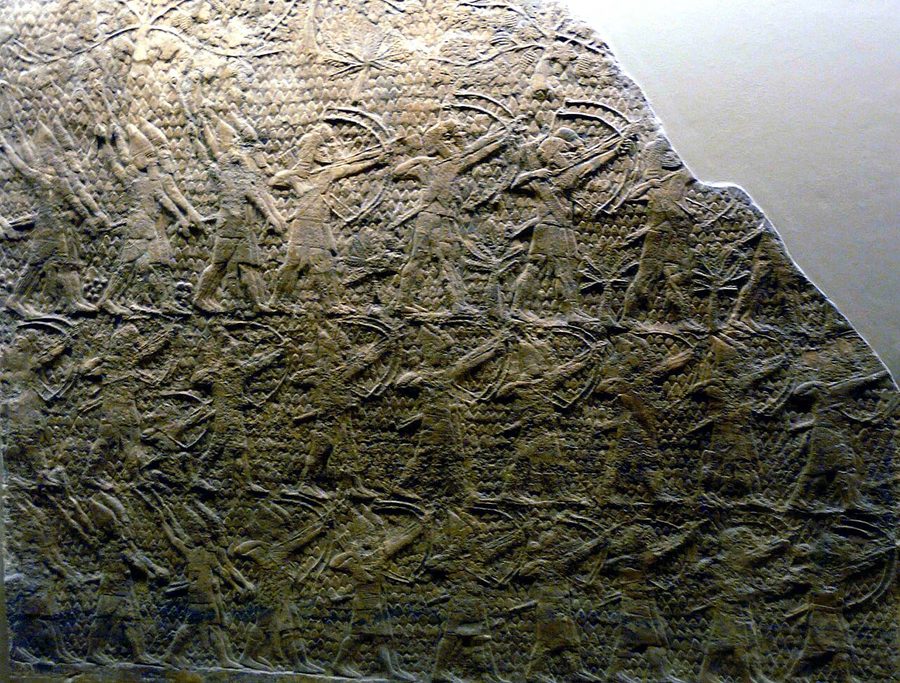
Photo: Ywpark2003, CC0, via Wikimedia Commons. Lachish reliefs
700–692 BC · gypsum
- What it supports
- Sennacherib gave a whole room of his palace at Nineveh to the siege of Lachish, Judah’s second city, which 2 Kings 18:14 and 2 Chronicles 32:9 say he besieged. The panels show the assault, the battering rams and the deportation of Judean families. British Museum · Tyndale House, Cambridge
- What it is
- Carved wall panels from Sennacherib’s South-West Palace at Nineveh, Iraq. This panel shows Assyrian archers and slingers.
- Where it is
- British Museum, London (124904–124915). Record
- Related question
- HQ17: Wasn't the Bible changed? Copied from pagan myths?
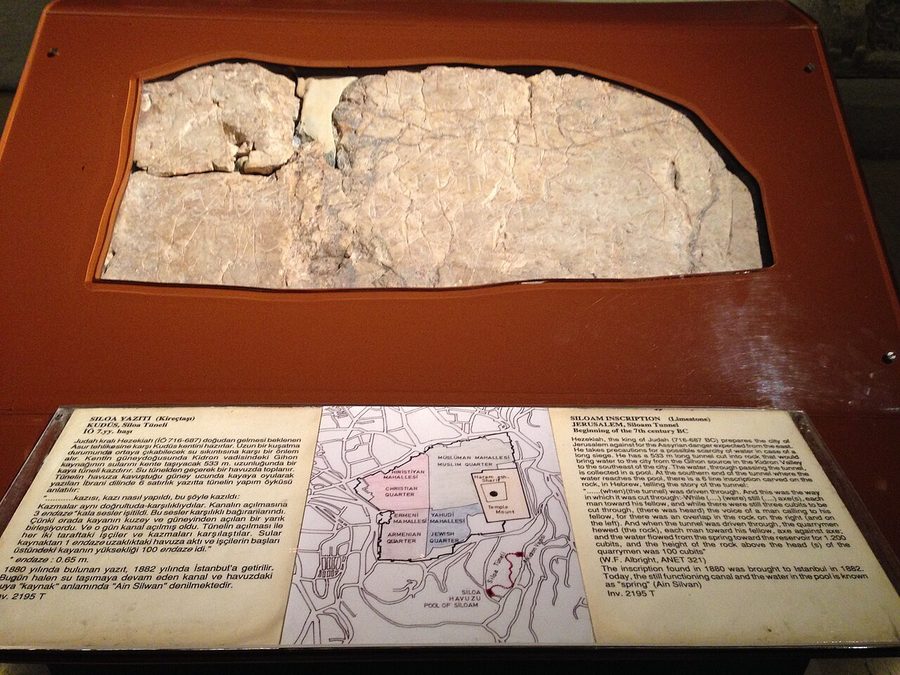
Photo: oncenawhile, CC0, via Wikimedia Commons. Siloam Inscription
About 700 BC · limestone · Paleo-Hebrew
- What it supports
- Carved inside the tunnel that brought water from the Gihon spring into Jerusalem, it describes the moment two teams of diggers met. The Bible credits Hezekiah with this tunnel (2 Kings 20:20; 2 Chronicles 32:30), and radiometric dating published in Nature (2003) places the tunnel in his era, around 700 BC. COJS · Frumkin et al. 2003
- What it is
- A Hebrew inscription cut into the wall of Hezekiah’s Tunnel, found in 1880.
- Where it is
- Istanbul Archaeology Museums (Inv. 2195 T). Record
- Limits
- The inscription itself names no king; some scholars date the tunnel a little earlier.
- Related question
- HQ17: Wasn't the Bible changed? Copied from pagan myths?
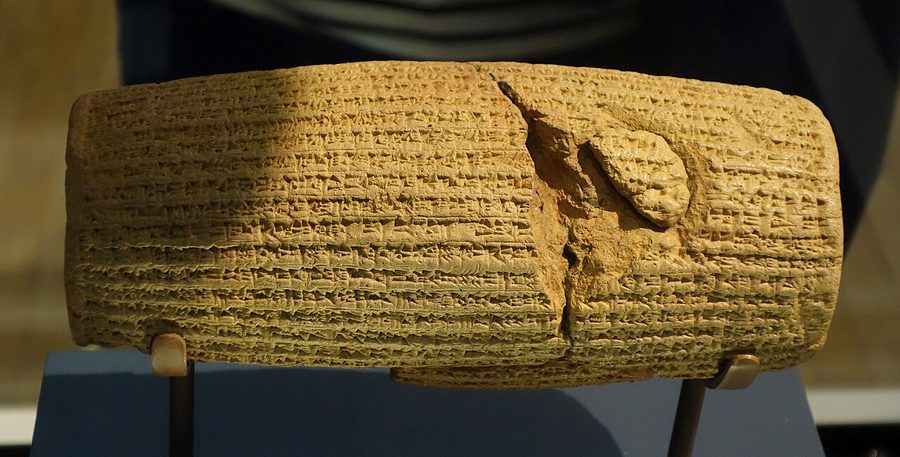
Photo: Daderot, CC0, via Wikimedia Commons. Cyrus Cylinder
After 539 BC · clay
- What it supports
- Cyrus of Persia records his capture of Babylon and his policy of returning deported peoples and their gods to their homelands. That is the policy behind his decree in Ezra 1:1–4 letting the Jews return to rebuild the temple, and Isaiah 45:1 names Cyrus as the one God would use. The British Museum’s curator compares it with Ezra directly. British Museum
- What it is
- A clay foundation text from the walls of Babylon, found in 1879.
- Where it is
- British Museum, London (1880,0617.1941). Record
- Limits
- It does not mention the Jews or Jerusalem by name.
- Related question
- HQ17: Wasn't the Bible changed? Copied from pagan myths?
The text of Scripture
The oldest copies show how early, and how well, the biblical text was preserved.
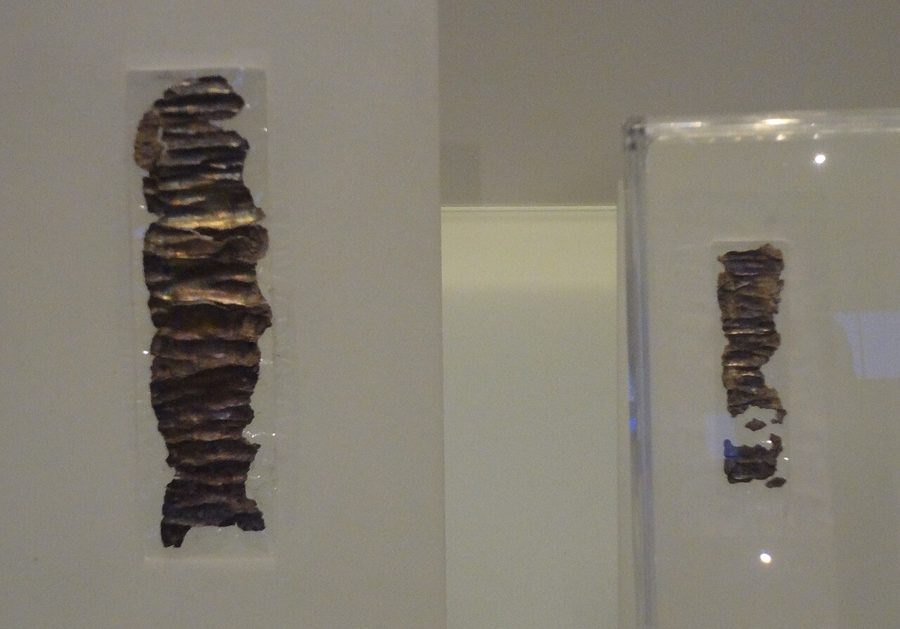
Photo: Bachrach44, CC BY-SA 3.0, via Wikimedia Commons (resized). Ketef Hinnom silver scrolls
6th century BC (Israel Museum) · silver
- What it supports
- Two tiny silver amulets inscribed with the priestly blessing of Numbers 6:24–26 (“The LORD bless you and keep you”). They carry the oldest known biblical text, centuries older than the Dead Sea Scrolls, and show this blessing was in use before the Babylonian exile. Israel Museum · Barkay et al. 2004
- What it is
- Rolled silver amulets found in 1979 in a burial cave at Ketef Hinnom, Jerusalem.
- Where it is
- Israel Museum, Jerusalem. Record
- Limits
- A minority of scholars argue for a later date.
- Related question
- HQ17: Wasn't the Bible changed? Copied from pagan myths?
No openly licensed photograph. See the record.
Great Isaiah Scroll
About 125 BC · parchment
- What it supports
- A complete copy of Isaiah, all 66 chapters, about a thousand years older than the medieval Hebrew manuscripts of Isaiah known before 1947. The Israel Museum says its text is in general agreement with the traditional Hebrew text: strong evidence of careful copying across a millennium. It includes Isaiah 53, the suffering servant passage Christians read as fulfilled in Jesus, centuries before his birth. Israel Museum
- What it is
- The best-preserved of the Dead Sea Scrolls, found at Qumran Cave 1 in 1947.
- Where it is
- Israel Museum, Jerusalem, Shrine of the Book. Record
- Limits
- It has many small variants in spelling and wording, mostly minor.
- Related question
- HQ17: Wasn't the Bible changed? Copied from pagan myths?
No openly licensed photograph. See the record.
Papyrus P52
Mid to late 2nd century AD · papyrus
- What it supports
- A fragment of John 18, from Jesus’ trial before Pilate. It is one of the earliest surviving pieces of the New Testament, and it was acquired in Egypt, far from where John is thought to have been written: the Gospel was already being copied and carried widely within about a century of Jesus. It comes from a codex, a bound book. University of Manchester
- What it is
- A papyrus scrap 89 × 60 mm, with John 18:31–33 on one side and 18:37–38 on the other.
- Where it is
- John Rylands Library, Manchester (Greek P 457). Record
- Limits
- Its date range is broad; the library gives mid to late second century.
- Related question
- HQ17: Wasn't the Bible changed? Copied from pagan myths?
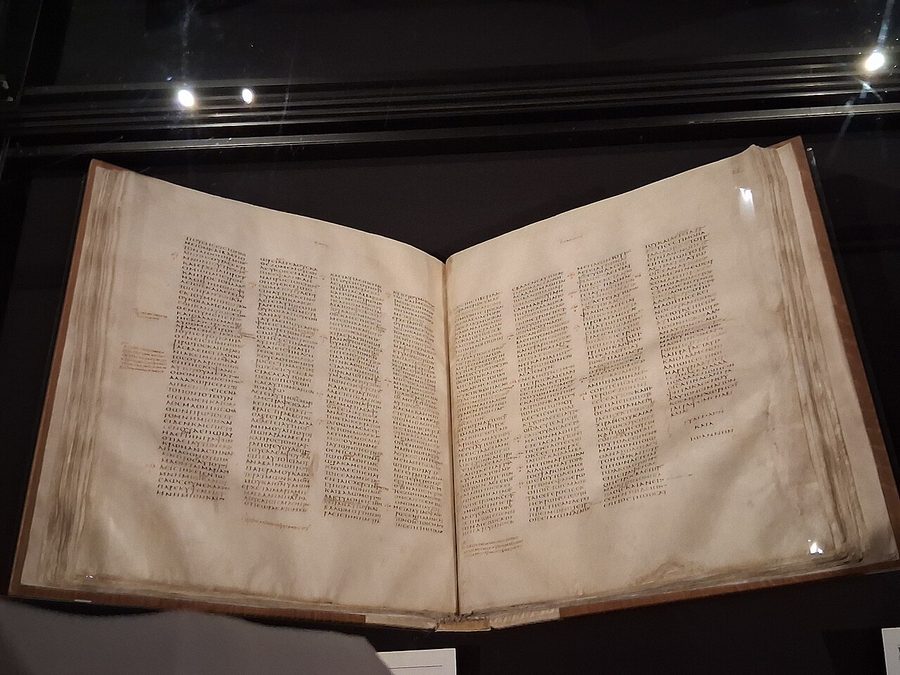
Photo: PotatoCow25, CC0, via Wikimedia Commons. Codex Sinaiticus
4th century AD · parchment
- What it supports
- The oldest complete New Testament in existence, in a Bible copied in the 300s. With Codex Vaticanus it is one of the two oldest surviving copies of the Greek Bible, and its text can be compared line by line with earlier papyri and later copies. The whole manuscript can be read online. British Library · Codex Sinaiticus Project
- What it is
- A hand-written Greek Bible found at St Catherine’s Monastery, Sinai, by Constantin von Tischendorf in 1844–59.
- Where it is
- British Library, London (Add MS 43725), with leaves in Leipzig, St Petersburg and Sinai. Record
- Limits
- Parts of the Old Testament are lost.
- Related question
- HQ17: Wasn't the Bible changed? Copied from pagan myths? · HQ25: Why were some books left out, and Esther left in?
No openly licensed photograph. See the record.
Codex Vaticanus
4th century AD · parchment
- What it supports
- The other of the two oldest surviving Greek Bibles, in the Vatican Library since before 1475. Some scholars think it slightly older than Sinaiticus. Britannica
- What it is
- A hand-written Greek Bible on parchment. Lost leaves were replaced in the 15th and 16th centuries.
- Where it is
- Vatican Library (Vat. gr. 1209). Record
- Related question
- HQ17: Wasn't the Bible changed? Copied from pagan myths? · HQ25: Why were some books left out, and Esther left in?
The world of Jesus and the apostles
People and places named in the Gospels and Acts, found in the ground and in the record.
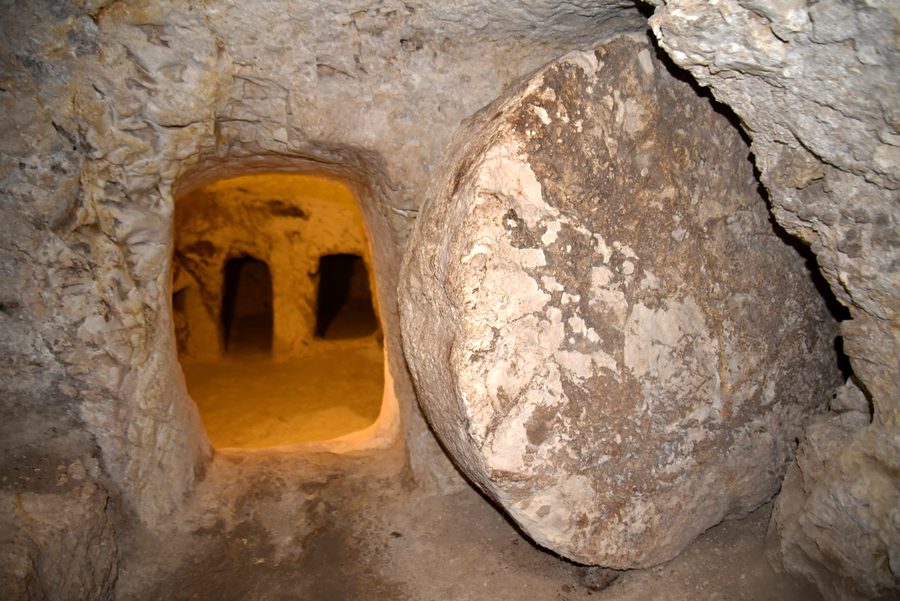
Photo: Bahnfrend, CC BY-SA 4.0, via Wikimedia Commons (resized). First-century houses at Nazareth
Late 1st century BC–1st century AD
- What it supports
- Excavations have found houses from the time of Jesus at Nazareth, beside the Church of the Annunciation and beneath the Sisters of Nazareth Convent. They answer the old claim that Nazareth did not exist in Jesus’ day (Luke 1:26; Mark 1:9). Israel Antiquities Authority
- What it is
- Two separate excavated house sites in central Nazareth.
- Where it is
- In place, Nazareth. One is open to visitors at the International Mary of Nazareth Center. Record
- Limits
- Neither house can be tied to a named family.
- Related question
- HQ15: Did Jesus exist? Wasn't he just a good man?
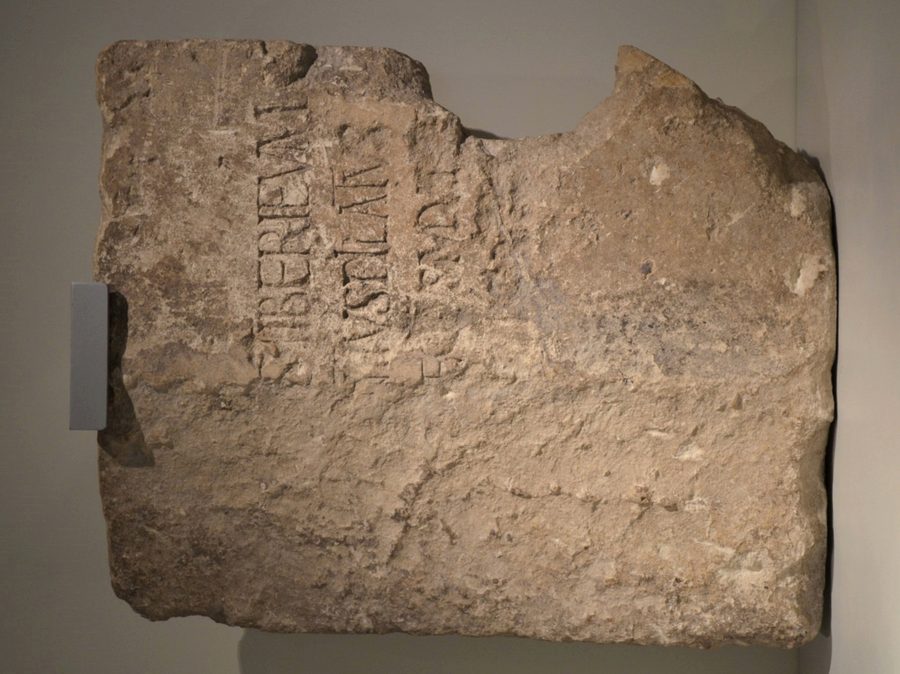
Photo: Carole Raddato, CC BY-SA 2.0, via Wikimedia Commons (resized). Pilate Stone
AD 26–36 · limestone
- What it supports
- A building dedication naming “Pontius Pilate, Prefect of Judea”, the Roman governor who sentenced Jesus (Mark 15; John 18–19). It confirms his name, his title and his time in office from his own day, as the Gospels and the historians Tacitus and Josephus describe him. Israel Museum
- What it is
- An inscribed block found in 1961 in the Roman theatre at Caesarea Maritima.
- Where it is
- Israel Museum, Jerusalem (IAA 1961-529). Record
- Related question
- HQ15: Did Jesus exist? Wasn't he just a good man?
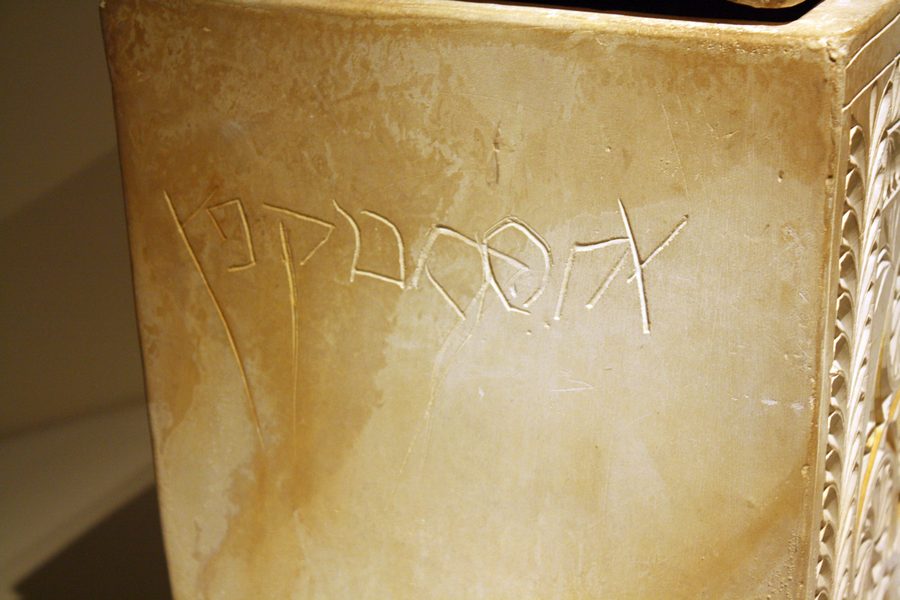
Photo: BRBurton, CC0, via Wikimedia Commons. Caiaphas ossuary
1st century AD · limestone
- What it supports
- A decorated bone box from a Jerusalem family tomb, inscribed “Joseph son of Caiaphas”, the name of the high priest who handed Jesus to Pilate (Matthew 26:57; John 18:13–14). The Israel Museum exhibited it as the ossuary of the high priest Caiaphas. Israel Museum
- What it is
- An ornate limestone ossuary found in 1990 in a burial cave south of Jerusalem’s Old City.
- Where it is
- Israel Museum, Jerusalem. Record
- Limits
- The bones in it cannot be identified with certainty as the high priest’s.
- Related question
- HQ15: Did Jesus exist? Wasn't he just a good man?
No openly licensed photograph. See the record.
Heel bone with crucifixion nail
1st century AD · bone and iron
- What it supports
- A heel bone with an iron nail still through it, from a Jewish family tomb in Jerusalem, inscribed “Yehohanan son of Hagkol”. It is physical evidence of Roman crucifixion in Jesus’ time and place, and shows that a crucified man could receive a family burial, as the Gospels say Jesus did (Mark 15:42–46). Israel Museum
- What it is
- An ossuary with a heel bone and nail, found in 1968 at Givat HaMivtar, Jerusalem.
- Where it is
- Israel Museum, Jerusalem. Record
- Related question
- HQ16: Did he really rise? Aren't miracles impossible?
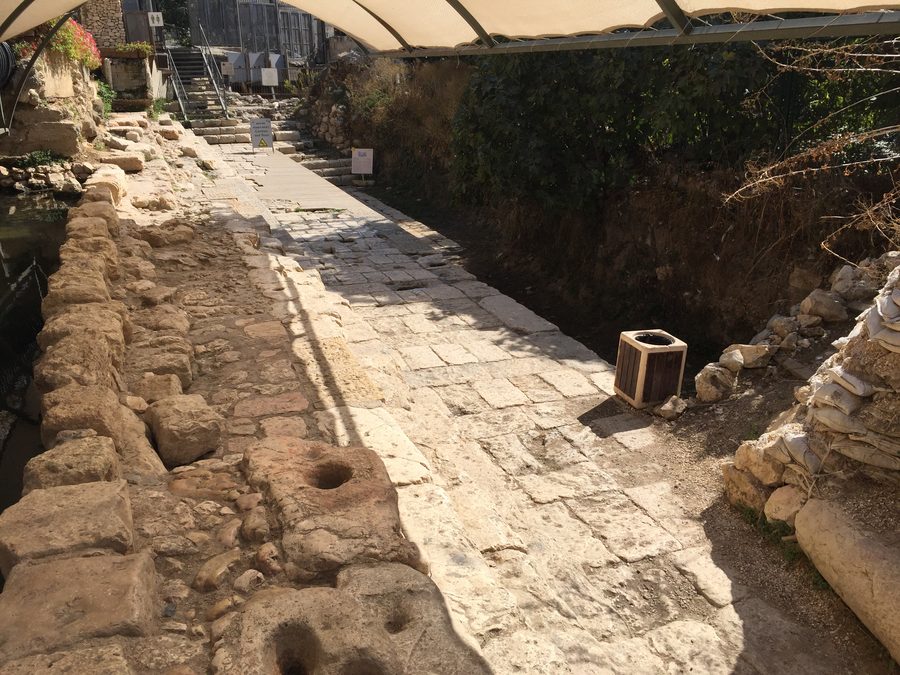
Photo: Markbarnes, CC BY-SA 4.0, via Wikimedia Commons (resized). Pool of Siloam
Rebuilt late 1st century BC–1st century AD
- What it supports
- In 2004 excavators found the stepped pool of the Second Temple period at the south end of the City of David, where John 9:7 places the healing of the man born blind. With Bethesda, it shows the Gospel writer knew Jerusalem’s pools at first hand. Israel Antiquities Authority
- What it is
- A stepped stone pool in the City of David, Jerusalem, now being further excavated.
- Where it is
- In place, City of David, Jerusalem. Record
- Related question
- HQ24: Don't the Gospels contradict each other?
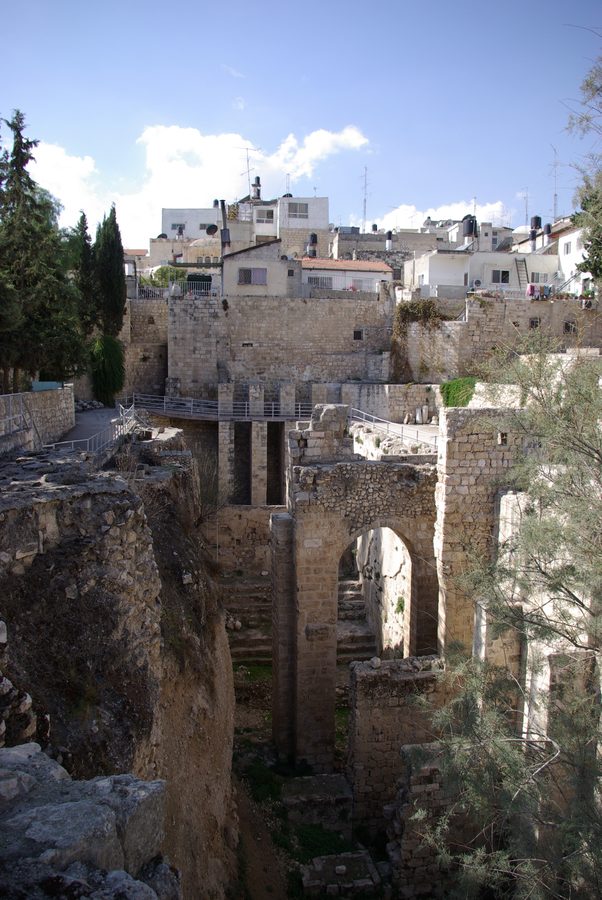
Photo: Berthold Werner, public domain, via Wikimedia Commons. Pool of Bethesda
1st century BC onwards
- What it supports
- John 5:2 describes a pool by the Sheep Gate with five porticoes. Excavations at St Anne’s, near the Lions’ Gate, uncovered a double pool divided by a central dam, which fits that description of four sides and a middle. Pro Terra Sancta
- What it is
- Remains of a two-basin pool complex in the grounds of St Anne’s Church, Jerusalem.
- Where it is
- In place, St Anne’s, Old City of Jerusalem. Record
- Limits
- Its building phases and use are still studied.
- Related question
- HQ24: Don't the Gospels contradict each other?
No openly licensed photograph. See the record.
Gallio inscription (Delphi)
AD 52 · stone
- What it supports
- A letter of Emperor Claudius naming “Lucius Junius Gallio, my friend and proconsul” of Achaia, the official before whom Paul was tried at Corinth (Acts 18:12–17). It fixes Gallio’s term to about AD 51–52, which dates Paul’s stay in Corinth and anchors the chronology of his letters. Britannica · Bible Odyssey
- What it is
- Nine fragments of an inscribed letter found at Delphi, Greece, from 1905.
- Where it is
- Delphi, Greece. Record
- Limits
- Scholars differ by about a year on Gallio’s exact term.
- Related question
- HQ29: Didn't Paul invent Christianity?
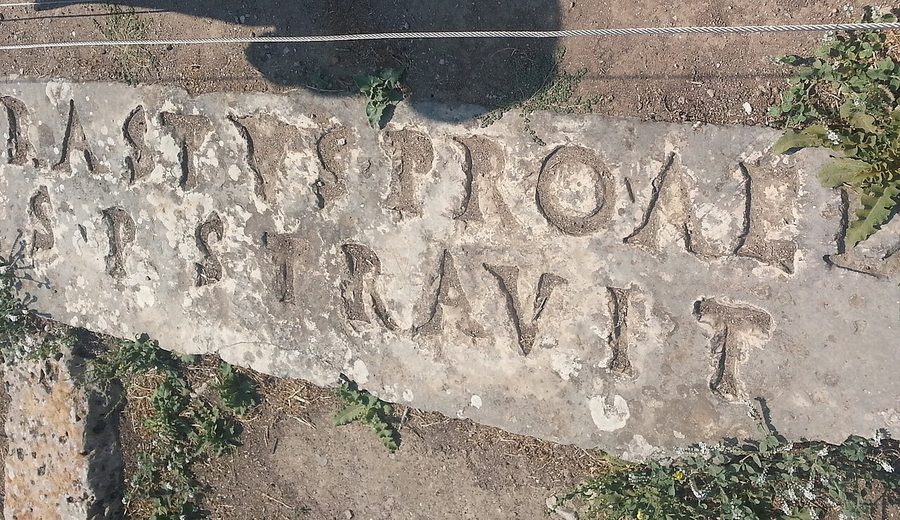
Photo: Rduncan2, CC BY-SA 4.0, via Wikimedia Commons (cropped, resized). Erastus inscription (Corinth)
1st–2nd century AD · limestone
- What it supports
- A pavement laid by “Erastus, in return for his aedileship, at his own expense”. Paul, writing from Corinth, sends greetings from “Erastus, the city’s treasurer” (Romans 16:23). Studies of the name show it was rare, which strengthens the case that this is the same man. Brookins 2013
- What it is
- A Latin inscription set in a paved square east of the theatre at Corinth, found in 1929.
- Where it is
- In place, Ancient Corinth, Greece. Record
- Limits
- Whether this is Paul’s Erastus, and its exact date, are debated.
- Related question
- HQ29: Didn't Paul invent Christianity?
Creation and the fossil record
Sites both design views study, and what they point to.
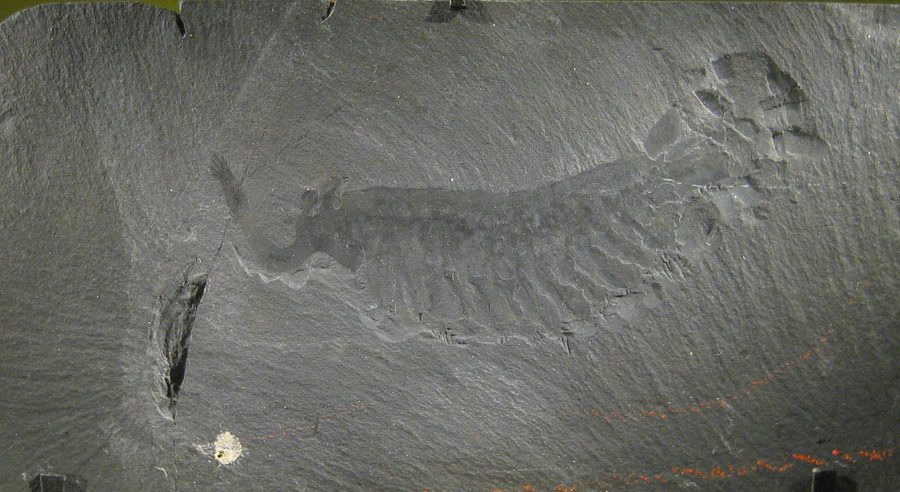
Photo: Jstuby, public domain, via Wikimedia Commons. Burgess Shale fossils
Cambrian · Yoho National Park, British Columbia
- What it supports
- Some of the finest fossils from the Cambrian period, when most major animal body plans appear in the record in a geologically short time. Stephen Meyer argues that this sudden appearance of complex, information-rich animal forms points to intelligent design rather than gradual change. Parks Canada notes that some preserve eyes, guts and even brains. Smithsonian · Meyer 2004
- What it is
- A fossil bed high on Fossil Ridge near Field, British Columbia. The photo shows Opabinia regalis, a five-eyed Cambrian animal.
- Where it is
- In place in Yoho National Park; specimens at the Royal Ontario Museum and the Smithsonian. Record
- Limits
- Young-earth and old-earth creationists read its age differently.
- Related question
- HQ09: Isn't design just a gap in our knowledge? · HQ10: Where did male and female come from? Where are the transitional fossils?
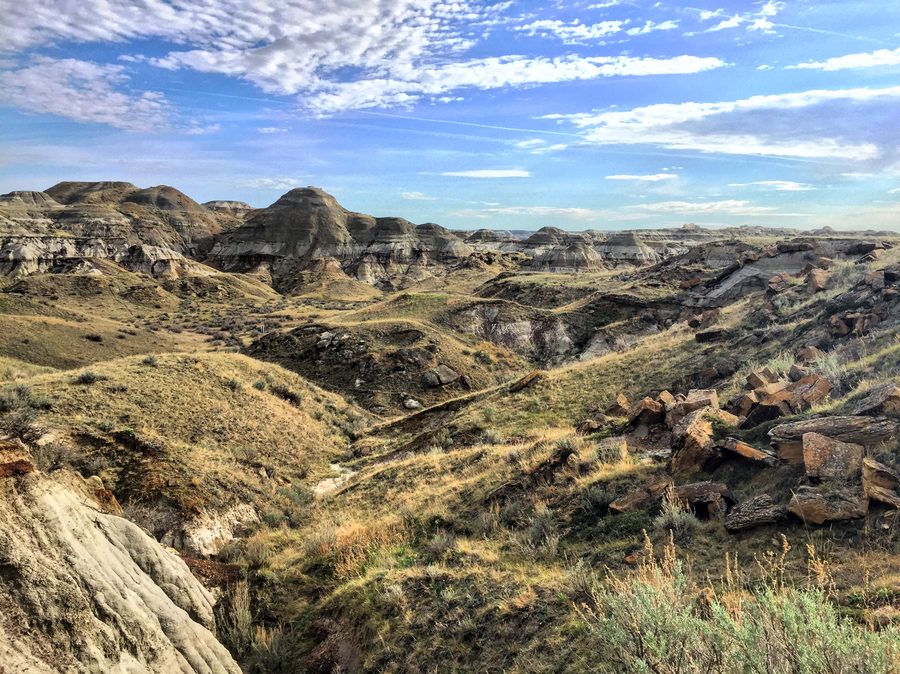
Photo: Nancymcmillan, CC BY-SA 4.0, via Wikimedia Commons (resized). Dinosaur Provincial Park, Alberta
Late Cretaceous · UNESCO World Heritage Site
- What it supports
- One of the world’s great dinosaur fossil sites, in Alberta’s badlands. Young-earth creationists see its river deposits and mass burials as the work of rapid, catastrophic flooding; old-earth creationists read its layers as a long history the Creator governed. Both treat it as creation’s record. Alberta Parks
- What it is
- Protected badlands 48 km northeast of Brooks, Alberta.
- Where it is
- In place, Dinosaur Provincial Park, Alberta. Record
- Related question
- HQ11: How old is the earth? What about dinosaurs?